


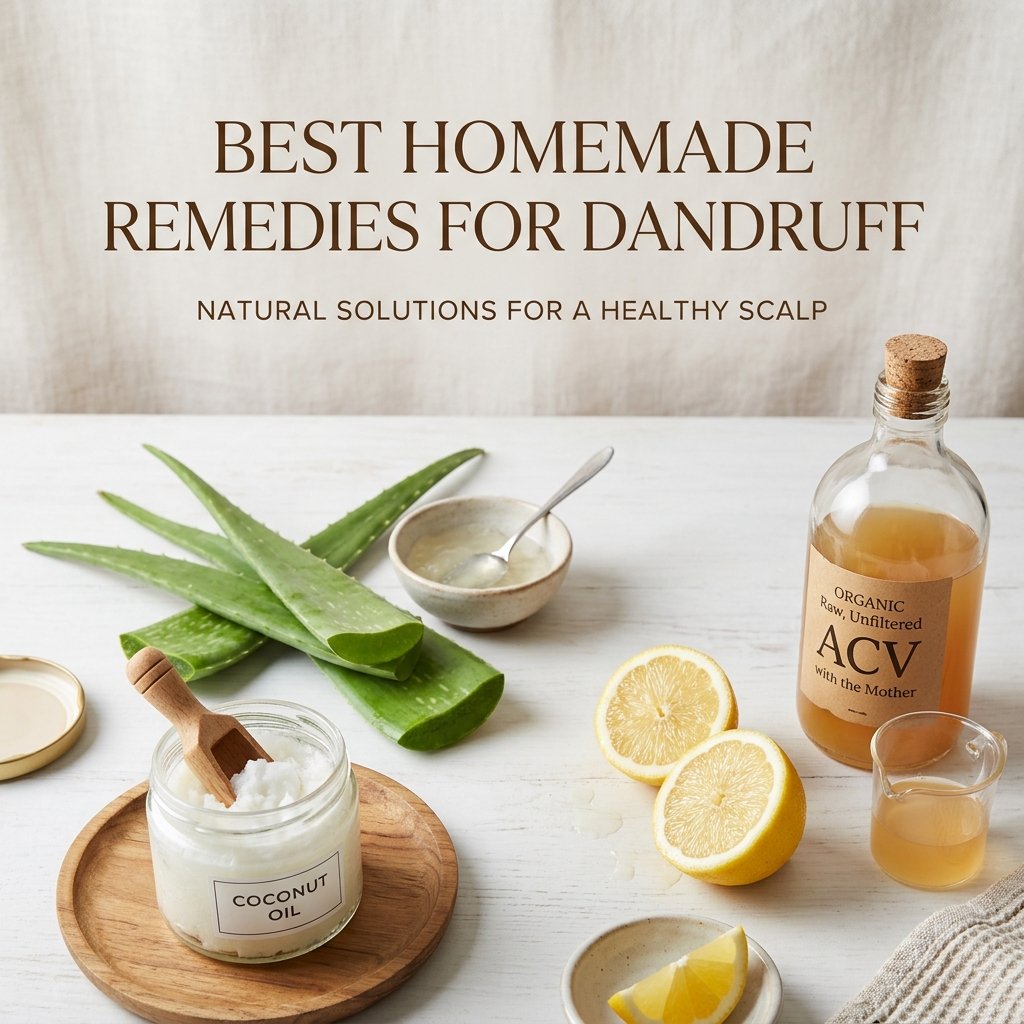
Dealing with dandruff can be both embarrassing and uncomfortable. Sometimes, no matter what product you buy, those pesky flakes seem to return. Furthermore, many store-bought shampoos are filled with chemicals that can dry out or irritate your scalp even more.
Fortunately, there are simple, natural alternatives. Homemade remedies for dandruff are gaining popularity because they use gentle, everyday ingredients. These options not only help control flakes but also nurture your scalp gently.
Why Does Dandruff Happen?
To get started, it helps to know why dandruff appears. Dandruff happens when the scalp sheds dead skin cells as larger, more visible flakes. Several factors can trigger this process, including dry skin, excessive oiliness, sensitivity to hair care products, or the growth of a fungus called Malassezia.
As a result, the scalp often feels itchy, tight, or even painful. Along with the itch, many people find their self-confidence suffers. It’s natural to want a solution that works—and lasts longer than just a day or two.
Here’s where homemade remedies for dandruff can truly make a difference. Since you prepare these solutions yourself, you can see exactly what goes on your skin and tailor the remedy to your needs.
Benefits of Choosing Homemade Remedies
Opting for homemade remedies for dandruff has several unique benefits. Firstly, these remedies often contain natural ingredients without the harsh additives found in many commercial products. This means they’re typically safer for sensitive scalps and less likely to cause irritation.
Moreover, you can adjust ingredients and quantities to match what feels best for your scalp. This level of control makes each treatment feel more personal and adaptable.
Additionally, homemade treatments tend to be cost-effective. Instead of spending money on high-priced treatments, you can use common kitchen ingredients. Plus, by using products you already trust, you may further reduce your risk of unwanted reactions.
Evidence-Based Homemade Remedies for Dandruff
Now, let’s explore several science-backed homemade remedies for dandruff you can try right away. Each remedy below is easy, safe, and explained with step-by-step guidance.
1. Tea Tree Oil Treatment
Tea tree oil is famous for its antifungal and antibacterial powers. Recent studies support its ability to help reduce dandruff by targeting scalp fungi.
How to use:
- Mix 4-5 drops of pure tea tree oil with 2 tablespoons of a carrier oil such as coconut or olive oil.
- Massage the mixture gently into your scalp using your fingertips.
- Leave it on for at least 30 minutes, then wash your hair with a mild shampoo.
Why it works: Tea tree’s natural ingredients help relieve itching, reduce flakes, and create a healthier scalp environment.
Tip: Always test a small area first, as essential oils can cause sensitivity for some people.
2. Aloe Vera Gel Mask
Aloe vera is known around the world for calming skin and reducing redness. When applied to the scalp, it deeply hydrates and can help ease discomfort associated with dandruff.
How to use:
- Scoop a few tablespoons of pure aloe vera gel (choose fresh or a store-bought variety with no extra chemicals).
- Use your fingers to gently work the gel into your scalp.
- Let it rest for about 30 minutes before rinsing out with a gentle shampoo.
Why it works: The gel cools your scalp and helps clear away dead cells through gentle, natural enzymes.
3. Apple Cider Vinegar Rinse
Apple cider vinegar, or ACV, isn’t just a pantry staple—it’s a popular remedy for resetting scalp balance. It helps maintain your scalp’s pH, making it harder for fungus to thrive.
How to use:
- Combine equal parts apple cider vinegar and lukewarm water.
- Pour the mixture slowly over your scalp after shampooing, massaging lightly.
- Let it sit for 5–10 minutes, then wash out completely with water.
Why it works: ACV acts as a mild exfoliant, helping remove old flakes while making hair look shinier.
Note: Never use undiluted vinegar as it can be too harsh for your scalp.
4. Yogurt and Honey Scalp Pack
You may already know yogurt is full of probiotics and protein, but it can also nourish your scalp. Paired with honey, which is naturally antibacterial and moisturizing, this mixture soothes and hydrates.
How to use:
- Mix 2 tablespoons of plain yogurt (without added sugar) and 1 tablespoon of raw honey.
- Spread evenly over your scalp, focusing on flaky areas.
- Leave for 20–30 minutes, then shampoo hair as usual.
Why it works: Yogurt lightly exfoliates, while honey calms irritation and strengthens your natural skin barrier.
5. Baking Soda Scrub
If you notice stubborn, thick flakes, baking soda offers gentle exfoliation without causing damage.
How to use:
- Wet your hair well, then sprinkle a teaspoon of baking soda on your scalp.
- Gently massage using circular motions. Avoid rough scrubbing.
- Rinse thoroughly. If your scalp feels clean, you can skip using a shampoo for this wash.
Why it works: Baking soda absorbs extra oil and removes build-up, but always use this treatment only once a week so you don’t dry out your scalp.
Important: Overuse can lead to dryness or sensitivity, so moderation is key.
6. Coconut Oil Overnight Treatment
Coconut oil is often recommended because it’s rich in fatty acids that feed and protect the scalp. When used overnight, it can deeply moisturize and soothe itching.
How to use:
- Warm 2-3 tablespoons of coconut oil in your hands.
- Apply gently to your scalp, taking care to distribute evenly.
- Cover your hair with a soft cloth or shower cap, and leave the oil on all night.
- Wash out gently with mild shampoo the next morning.
Why it works: The oil’s nourishing texture locks in moisture, helping to soften flakes and encourage balance on the scalp.
Lifestyle Tips to Prevent Dandruff
Of course, managing dandruff isn’t only about what you put on your hair. Daily habits have a big role, too. That’s why including positive lifestyle changes can make homemade remedies for dandruff even more effective.
- Wash consistently: Aim to wash your hair 2–3 times a week with a mild, sulfate-free shampoo.
- Eat well: Foods with zinc, B vitamins, and healthy fats (like leafy greens, seeds, and nuts) support scalp health.
- Handle stress: Chronic stress can worsen dandruff. Try calming activities like walking, stretching, reading, or listening to relaxing music.
- Avoid overwashing: Washing too often strips your scalp’s natural oils, making flakes more likely.
With these habits, you can help keep your scalp in balance—making it easier for natural remedies to do their job.
When to See a Specialist
While homemade remedies for dandruff work for many people, sometimes, itchy flakes won’t go away or might get worse. If you experience severe itching, redness, swelling, or significant hair loss, it’s a good idea to reach out to a dermatologist. They can check for underlying conditions and suggest stronger treatments if necessary.
Final Words
Dandruff is incredibly common, and it doesn’t need to hold you back. Homemade remedies for dandruff are a gentle, affordable way to improve your scalp and boost your confidence. Although results aren’t instant, patience and consistency really pay off.
Try out a few remedies and notice which fits your lifestyle best. With time, you’ll likely see improvements in both flakes and scalp comfort. If you find that a certain natural remedy works especially well, feel free to make it part of your regular hair care routine. Your journey towards a healthier, flake-free scalp can absolutely start today.
Frequently Asked Questions
How often should I use homemade remedies for dandruff?
Most remedies can be used once or twice per week, depending on your scalp’s needs. Always start slow and adjust as you see results.
Can I use more than one homemade remedy at the same time?
It’s generally best to try one remedy at a time to see how your scalp responds. You can alternate remedies until you find the combination that works best for you.
Are homemade remedies for dandruff safe for everyone?
Most people find these remedies gentle and safe, but it’s always wise to patch test a small area first, especially with essential oils or if you have sensitive skin.
Will I see instant results with these remedies?
Natural remedies often take a bit more time than medicated shampoos. With regular use and patience, you should notice steady improvement.
When should I stop using a homemade remedy?
If you notice irritation, redness, or increased itching, discontinue use right away. Listen to your scalp and consult a healthcare professional if symptoms persist.

